Wednesday, January 30, 2013

The Power of a Heart Rate Monitor
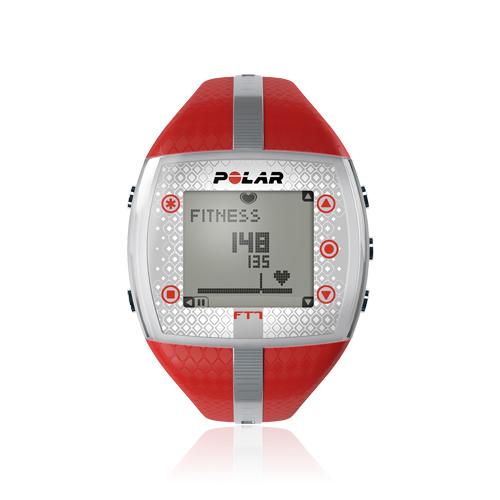
In my efforts to lose weight and become more fit, I decided to purchase one of these to evaluate it's use.  I have always worked out and been able to stay pretty fit.  However, with 3 kids and a business I just don't have the time as I did before.  My goal has been to maximize my workouts.  There is an important tidbit I did not know, simply because I have never monitored my heart rate.  The longer I can stay within my calculated zone, the greater % of calories from fat I will burn.  It may be less calories, but if my goal is to burn the fat, this is what I need to aim for.  Well, I decided to test this out.  I purchased the above and sampled a bootcamp class, running on a treadmill, RPM class, Cycle class, and walking.  All these were done in a 45 minute time-frame.  What I noticed is that the classes that burned the most calories, the % calories being burned from fat was lower.  I also noticed my heart rate did not stay within it's target range in these high intensity classes. As you can imagine, it was much higher!!!!! 

What does all this mean?  For me, I only have a limited time to exercise and right now I am trying to burn as many calories from fat as I can!  Therefore, I don't need to push myself in some of these classes and can scale back on the intensity level:)  So, yes you do burn less calories but as long as you are keeping your calories in check and maximizing your time in your zone, it's a win-win!  Below are a few excerpts I found while testing this out:


Fitness/Fat-Burning Zon
e (Fat Burning)
(60–75% of maximum heart rate) Burns more calories than a healthy heart at rest. Optimal fat burning consists of working out at a moderate intensity level you can sustain for long periods of time. This trains your metabolism so your body releases more fat from your fat cells throughout the day.
Aerobic Zone (Endurance Training)
(70–80% of maximum heart rate) Improves your cardiovascular and respiratory system and increases the size and strength of your heart. This is the preferred zone if you’re training for an endurance event. Your body burns more calories, 50% of them from fat.
High Intensity/Anaerobic Threshold Zone (Performance Training)
(80–90% of maximum heart rate) This is a high-intensity zone that burns more calories, around 15% of them from fat. You’ll benefit from an improved cardio respiratory system, fight fatigue better, and improve endurance. For optimal fat burning cardio, train at high intensities in short bursts of time (1–3 minutes each), recover, and repeat several times. This is the most efficient way to raise your metabolism and burn fat. You’ll burn 100% carbs as a source of energy during these bursts.
Red Line Zone (Maximum Effort)
(90–100% of maximum heart rate) Although this zone burns the most calories, it’s very intense and hard to maintain. Only train in this zone for short periods of time, and only if you’re in good shape and cleared by a physician.
Each zone has key aspects to overall fat burning. An optimal program consists of workouts in all zones each week. Each person’s heart rate will be different for each zone.
Calculate your estimated maximum heart rate with this formula:
Women, subtract your age from 226.
Men, subtract your age from 220.
This is your age-adjusted maximum heart rate
Now take your age-adjusted maximum heart rate and calculate the following percentages for the various parts of your workout.
60% for your warm-up and cool down
65–75% for your moderate pace
75–85% for your vigorous or interval pace
For instance, a 40-year-old woman’s estimated maximum heart rate is 186 (226 – 40 = 186).
60% of her max = 112
65% of her max = 121
75% of her max = 140
85% of her max = 158
Hope this little bit of information has helped! Just as with eating, if you have the right tools and knowledge it makes all the difference.
To Your Health!
Melanie Rubery MS RD LD CLT
Try our online nutrition program, Sensibalance FREE for 30 days!  CLICK HERE!

Friday, January 18, 2013

Your RMR!  Do You Know Yours?

Do you know your RMR?  Better yet, what is RMR!  RMR (resting energy expenditure) is the number of calories your body burns each day with little or no activity.  Why is this important?  Your RMR makes up the largest (65-75%) of your total metabolism.  Knowing your RMR is a key tool in weight management.  There is no good or bad RMR, only your unique number.  There is no specific standard for individual metabolism, your RMR can vary based on your weight, age, muscle mass, genetics, and gender.  

The great thing is you can influence your RMR over time.  RMR is heavily influenced by your body and lean muscle weight.  As your weight decreases, your RMR will as well (normal response as your body doesn't need as many calories to support it).  However, it is possible to maintain or increase by building more muscle. This is why it is important to exercise why you restrict calories in weight reduction.  If you restrict calories and lose weight with limited or no strength training, your RMR will decrease.  To maintain your weight, you will have to limit your calories at that level and maybe a bit further.  If you exercise and build lean muscle as you lose weight, you can consume a greater number of calories and maintain your weight-your body is more metabolically active.

Here's an example:
RMR=1580 calories.  If this person has a light everyday activity plus exercises moderately for about 3 hours/week, their daily calorie expenditure is around 2200 calories.  In order to lose weight (say 1 pound/week), they would need to limit calories to around 1400/day.  Remember, if you restrict calories too low your body may think it's starving and "hold"on to it's weight.  You may be eating too few calories!  It all depends on your unique RMR and activity level.

How do you measure your RMR?  Simply find a dietitian or practitioner who includes this device in their practice. Two of the most popular are the BodyGem and MedGem.  If you live in the local Birmingham area, I can give you a few references.

To Your Health!
Melanie Rubery MS RD LD CLT
2054920404

For more information on the Sensibalance Nutrition Program, CLICK HERE!  30-day FREE Trial


Thursday, January 10, 2013

Do You Have Hypothyroidism?


The thyroid is a gland you should take notice of, especially if you over 35 or have difficulty losing weight.  Hypothyroidism occurs when this gland doesn't produce enough of certain hormones.  As we age, hormones begin to make their voice known loud and clear.

So, how do we know?  Hypothyroidism develops over a period of time and varies from individual to individual.  However, start to monitor the below symptoms if you have a concern:
  • Fatigue
  • Increased sensitivity to cold
  • Constipation
  • Dry skin
  • Unexplained weight gain
  • Puffy face
  • Hoarseness
  • Muscle weakness
  • Elevated blood cholesterol level
  • Muscle aches, tenderness and stiffness
  • Pain, stiffness or swelling in your joints
  • Heavier than normal or irregular menstrual periods
  • Thinning hair
  • Slowed heart rate
  • Depression
  • Impaired memory
There are also individuals at increased risk of developing hypothyroidism:
  • Are a woman older than age 60
  • Have an autoimmune disease
  • Have a close relative, such as a parent or grandparent, with an autoimmune disease
  • Have been treated with radioactive iodine or anti-thyroid medications
  • Received radiation to your neck or upper chest
  • Have had thyroid surgery (partial thyroidectomy)
  • Have been pregnant or delivered a baby within the past six months
So, how do you find out?  You can visit your local primary care physician or OB and have them do a blood draw.  An at home way (per Dr. Oz) is to take your temperature first thing in the morning before getting out of bed.  If the average over 7 days is below 98 degrees, you may have an issue.  

After having 3 kids , family history of thyroid disease, and getting to the point where I see the 40 number knocking on my door, I decided to do the home method for checking my temperature.  I'll keep you posted on my results!

To Your Health!

Melanie Rubery MS RD LD CLT

For more information on our Sensibalance Wellness Program, CLICK HERE!  30-day FREE Trial! 

Monday, January 7, 2013

Fiber-Should I Care?  Yes!

Many of us know fiber is good for us, but we fail to meet our daily requirement.  As I focus on the "quality" of one's calories this year, fiber is key to consider.  As I have said in earlier posts, you may keep your calories under control, but are they good calories?  Do they help you meet your fiber requirement, do they include the antioxidant powerhouses such as fruit and veggies, etc.  So why is fiber important?  Let me list a few:
  • Maintains bowel health
  • Lowers cholesterol
  • Helps control blood sugar levels
  • Aids in meeting healthy weight goals
How much do you need?
Ages 50 or younger-38 grams for men and 25 grams for women
Ages 50 and older-30 grams for men and 21 grams for women

A good source of fiber is anything around 3 grams of fiber/serving.  A high-fiber source is anything that provides 5 grams or more per serving.  So what are the best sources?  Look above!  Fruits and veggies are the most common sources-yet again another reason to include them in your daily eating regimen.  Beans such as lentils, black beans, and chickpeas are good sources as well.

My recommendation is to space your fiber intake throughout the day.  For example, if you are aiming for 25 grams then look to eat 6 grams at each meals and the remaining in your snacks.  Your tummy will appreciate this.  You also want to ensure you are consuming enough water.

In an effort to do this myself, let me provide you with my breakfast this am:

Egg and Salsa Tortilla
1egg scrambled
Mission carb balance whole wheat tortillas
salsa
Directions:  Simply make an egg fajita:)  Fiber-10 grams

Sensibalance Food BAR Information: 1 Protein and 1 Crabohydrate Food Bar

For more information about our Sensbalance Wellness program, CLICK HERE!
30 day FREE trial
Fiber tracking available plus many more features.  Revised app coming soon!!!!!!!

Healthy Regards,
Melanie Rubery MS RD LD
205-492-0404
melanie@healthylifeandnutrition.com

Tuesday, January 1, 2013

All-In-One Nutritional Shake

Happy New Year Everyone!  I wanted to share a great shake mix I have been using.  It is 100% plant based and comes in multiple flavors.  It mixes with water, juice, non-dairy beverage, or milk.  Let me give you some nutritional specifics:
  • 15 grams of protein (equivalent to 2.7 eggs)
  • 1.5 grams Omega-3 fatty acids (same as 2.3 servings of salmon)
  • 1 billion probiotics (same as 1 cup yogurt)
  • 6 grams of fiber
  • greens (equivalent to 3 servings of vegetables)
  • antioxidants (same as 2.7 cups of blueberries)
  • If needed, it is dairy, gluten, and soy free
  • Only 11 grams of carbs with 2 grams of sugar
I purchase mine locally at Whole Foods, however you can purchase on Amazon or ask your local health food store.

Melanie's My Vega Breakfast Blast
1 scoop of Vega One French Vanilla
1/2 frozen banana
1 cup non-fat milk
1/4 cup crushed ice

Blend and enjoy!

Food Bar Nutritional Information: 2 Carbohydrate Food Bars, 3 Protein Food Bars, and 0 Fat Food Bars.

For more information on the Sensibalance Wellness Program, CLICK HERE!  30 day FREE Trial!

To Your Health!

Melanie Rubery MS RD LD CLT
205-492-0404
melanie@healthylifeandnutrition.com


Monday, December 31, 2012

Creative Salad Additions

Happy New Year!  As the new year rolls in, you and I will probably make an effort to eat healthier.  Salads are a part of this.  My struggle with salads are that I get really bored.  I love a good salad from Panera Bread but this is not cost-effective or something I can realistically fit into a 3-4 day week plan.  This week while I was at the grocery store, I noticed the above in the freezer section.  Four varieties to make your own salad at home.  All you need to do is add your lettuce (spinach of course).  Genius!  All you need to do is throw the pack in the microwave for 2 minutes and 30 seconds, add your lettuce, and salad dressing pouch.  Let me give you the nutritional breakdown on the Bistro Chicken Salad:
  • Only 240 calories
  • 2 grams of fiber.  Once you add your spinach you can amp this up to about 5 grams/salad
  • Only 430 mg sodium
  • Low fat-8 grams (including the dressing)
  • full vegetable serving
  • 15 grams of protein
My focus this year is to eat more fruits and veggies and give my Sensibalance Wellness Community tips and recipes in how to do this.  Stay tuned to our blog for future recipes and food product reviews!

Happy and Healthy New Year!

Melanie Rubery MS RD LD CLT

If you are looking for a comprehensive food tracking program, check out Sensibalance!  Try it FREE for the first 30 days.  Log your food and exercise activities, monitor your food quality such as fruit, veggie, and dairy intake, plus get specific information such as the sodium, cholesterol, fiber, saturated fat, and etc with the foods you are eating.  CLICK HERE for more information!


Wednesday, December 26, 2012

A New Year! A Healthier You!
Here we go!  It's another year and many will be making their resolutions.  You may hear or plan yourself to lose weight, start exercising, etc.  These are not bad resolutions, but I think many get lost in what it means to truly be healthy.  I want to challenge you to not focus so much on what the scale says or the number of pounds you want to lose.  Choose to make the effort to eat healthfully and incorporate an activity schedule.  Focus on small realistic goals.  Let me give you some specific examples:
  • What's the quality of your calories?  One may say, "I'm eating only 1200 calories on my plan." My first question is-What are you eating?  For example, I can eat a donut for breakfast, hamburger with fries (small serving of course), chicken nuggets for dinner, and say a little debbie for a snack and stay within 1200 calories.  However full of fat, sat fat, carbs, no fruit and veggies, etc.-NOT HEALTHY!  Remember that good food (fruits and vegetables) have disease preventive benefits.  This year I challenge you to focus on the quality of your food and not just your calories or points!
  • Food Journaling-I'm a firm believer in moderation.  Moderation however is defined differently by each individual.  To get a better perspective on where you need to go, you need to know where you have been.  Food journaling allows you to see how many calories you've been consuming.  It can also serve as an accountability system to help you stay in check.  If you have hypertension you need to monitor your sodium intake, if you have diabetes you need to monitor your carb intake, or if you have high cholesterol you need to monitor your sat fat intake. Look for food journaling systems that gives you this information.  
  • Be well-rounded in your quest for health-This means not focusing on just your exercise or food intake.  I firmly believe you need both!  I may not be able to reach "that" number on the scale, but if I can last through a spinning session, I feel good!  For you, it may be to walk 3 miles, or swim X number of laps.  Personalize it for you.  The most important thing is to incorporate both.
  • Be moderate and make it a family affair-Many of us start programs that isolate us from the rest of the family.  We may be able to do it for a little bit, then we fall off the plan because it's too restrictive.  The demands of our family (children) catch up with us.  As you start the above, include it into your spouse's and kids eating/activity routine as well.  For example, one thing I plan to do this year is consistently eat more fruits and veggies.  I plan to create and look for recipes my hubby and kids will enjoy as well.  I plan to start running and get my kids signed up to do local 1 mile fun runs.  Again, decide what works for your family.  Studies show time and time that our children develop their activity and eating habits from their parents or those they are with a majority of the time.  
I hope 2013 is a great year for you!  As we start the New Year, let me provide you with a yummy detox fruit smoothie.  Full of fruit fiber, and antioxidants.
Blueberry Detox Smoothie
Ingredients
  • ½ cup frozen blueberries
  • ¼ cup unsweetened cranberry juice
  • 1 banana
Blend in mixer until combined!  Enjoy!

If you would like more information about our Sensibalance Wellness Program, CLICK HERE!  Our program is a great tool to journal food and keep up with nutrition specifics such as sat fat, fiber, sodium, etc. 30 Day FREE Trial available now!

Healthy and Happy New Year!

Melanie Rubery MS RD LD CLT
CEO, Healthy Life and Nutrition, LLC
205-492-0404
healthylifeandnutrition.com